How to Calculate ROI on Your HRIS
Yes, an HRIS is really worth the cost!
Implementing a human resources information system (HRIS) can increase efficiency, enhance compliance, and improve data accuracy. But, as with any investment, you’ll want to evaluate the return on investment (ROI) of specific software.
Calculating the ROI of an HRIS involves examining total costs (including software, training, and implementation) as well as tangible benefits, like increased productivity and reduced admin tasks. Our ROI calculator can help you see just how much your organization could save each year with HR software.
ROI calculator for HR software
Discover how much you can save with HR software
An HRIS stores, tracks, and processes employee information. This software can automate everyday HR functions like payroll and benefits administration. It also reduces your reliance on fragmented systems, helps you stay compliant, and reveals key data insights for better business decisions.
Companies lose thousands of dollars on inefficient people processes, and the impact on productivity stretches even further. An HRIS can significantly improve your organization’s operations, specifically in these four key areas:
Onboarding
From coordinating paperwork to setting up workstations and software permissions, a lot goes into onboarding new hires. The real kicker? HR professionals spend an average of 11 hours per hire juggling basic onboarding tasks. Thanks to an HRIS, that average drops to 5.5 hours per employee, freeing up valuable time for you to create a great new-hire experience.
Recordkeeping
Swapping out handwritten signatures for e-signatures with HR software saves about two hours per document. This small upgrade can save the equivalent of a part-time employee’s workweek. Electronic signatures alone save an average of $300 per new employee in printing, faxing, and copying documents. That’s great for the environment and your budget.
Administrative tasks
The average HR professional spends five hours per day on administrative tasks like data entry, compliance management, responding to employees, and more. Cloud-based HR software with employee self-service tools eliminates much of this manual work, reducing the average administrative workload to three hours per day—freeing HR teams for strategy, collaboration, and impact.
PTO tracking
Employees take an average of three unreported PTO days per year. With an average salary of about $37.17 per hour, the cost of three unreported days off comes in at $892.08 per year for each employee. HR software makes it easier to request, approve, and track time off, creating a more accurate, transparent system for PTO management.
How to calculate ROI
ROI is a useful, simple, and versatile measurement. It’s also easy to interpret and universally understood.
To calculate ROI, subtract the total investment cost from the final value of the investment to find your net profit. Then, divide that number by the total cost, and multiply by 100 to get your ROI percentage.
Here’s the standard ROI formula:
Step 1: Calculate your net profit
(Final Value of Investment) – (Initial Value of Investment)
Step 2: Calculate your ROI
(Net Profit / Total Cost of Investment) x 100
For example, if you sold an investment for $10,000 and its total cost (initial investment and fees) was $8,000, your net profit would be $2,000. Using the net profit, the ROI calculation becomes: ($2,000 / $8,000) x 100 = 25%.
While seemingly straightforward, the ROI formula relies on accurate costs. This can become a challenge when calculating ROI for a project or operating budget that’s under review.
Common ROI variations include annualized ROI, which adjusts for the length of the investment period, and forecasted ROI, which projects potential future returns.
HRIS ROI: Key considerations
HRIS systems require a financial investment, and securing a budget often means proving their value to senior stakeholders and finance teams. Estimating ROI can help you see how much value an HRIS would bring for your company.
Keep in mind that HR software comes with tangible and intangible rewards. This is where your ROI calculator will come in handy. As you're linking dollar amounts and time saved to justify the cost to key decision-makers, consider other benefits, such as:
- More opportunities to design and execute company programs boost employee retention, engagement, and job satisfaction
- Greater autonomy helps employees feel more invested in their roles
- Better communication builds a foundation of trust for employee advocacy
- Minimizing human error and risk protects your employer brand
Explaining the broader potential of an HRIS helps your stakeholders see its inherent value, while also solidifying the employee buy-in needed to support its success.
How to calculate ROI on your HRIS
To determine the ROI of an HRIS investment, you’ll need to consider various factors that contribute to the system's value.
Here are some key components to factor in when calculating your HRIS ROI:
- Investment costs: This covers initial upfront costs, recurring costs like maintenance and management fees, and indirect costs such as training and office expenses.
- Returns: Including direct returns (investment income or revenue), indirect returns (cost savings or increased productivity), and quantified benefits.
- Time period: The longer the investment is, the more it can be affected by inflation, missed opportunities, and more, which can lower the return on investment.
- Risk tolerance: Higher-risk investments may offer higher returns, but also carry a greater chance of failure. Meanwhile, low-risk investments can yield lower returns.
The gold standard for HR software ROI
Depending on the organization, a good ROI for software could range anywhere from 5% to 20%. But don't be deterred by a low initial return rate—it'll likely be different a year later because upfront costs are typically higher.
After all, consider the time it takes to educate your team about upcoming changes, implement the software, and train people on how to use it. You may also have to troubleshoot minor issues as your organization gets acclimated. Once you're up and running, your return on investment should grow into a more reliable benchmark.
The top 5 benefits of an HRIS
An HRIS is a powerful investment in your HR team—and one that can reshape your approach to company culture and people management for the better. Here are the top five advantages of having an HRIS:
1. You can get more done
Say hello to a new streamlined workflow. From payroll processing to performance management, automated tasks save time on repetitive processes. HR software also increases transparency, which boosts efficiency. Breaking down silos allows everyone to access the information they need, and instant data insights help you make informed decisions that support company growth.
2. Secure software lowers costly compliance risks
As an HR professional, you handle sensitive information every day. Replacing paper filing systems with digital data management provides greater security, minimizing costly fines and legal risks for your company. Whether it's incorrect time tracking or tax document errors, all-in-one HR software can save you thousands of dollars each year in avoidable company expenses.
3. More productivity means more savings
If you're looking for a way to consolidate tech spend, an all-in-one HRIS can do just that. Customers using software like BambooHR report saving up to 16 hours a week, leading to nearly $27,000 in cost savings per-year*.* Tools like an applicant tracking system (ATS) can help you find the most qualified candidates, and employee wellbeing tools can reduce turnover, saving an average of $4,700 for each new hire who stays long-term.
4. It's easy to use and easy to switch
User-friendly HR software is simple to learn and incorporate into your everyday routine, helping you do your job even better. It's easier to track hours, manage benefits, and run payroll, and it's easier for employees to access and edit their own information. And, if you ever get stuck, an HR platform backed by a responsive support team can help you get back on track.
5. Integrations add value
An HRIS with an open API can tie into the tools you already know and love. In fact, 62% of our customers use integrations from the BambooHR Marketplace, taking advantage of eight apps on average. And a single source of data doesn't just mean fewer vendors and headaches—when all your systems pull from one system of record, your workflows share the same level of intelligence, accuracy, and efficiency.
The average cost of HR software
Monthly HR software costs range from $35 to $99 for the system, plus $5 to $8 per employee. HRIS pricing typically depends on the number of administrators, capabilities, and other factors, so it's important to do your research.
BambooHR customers pay on a per-employee, per-month basis. There's no long-term contract—you simply pay a flat rate for a flexible HR software plan that suits your company's needs. Plus, you can earn discounts on software bundles and save even more as your company grows.
Designed for businesses of all sizes, BambooHR helps you find and onboard the best talent, manage payroll, time, and benefits, and enhance the employee experience. Our all-in-one HR software keeps everything in one place and connects to over 100 integrations, so you never miss a beat.
See how BambooHR® can help you achieve your HR goals.
HRIS ROI Frequently Asked Questions
What is return on investment (ROI)?
Return on investment (ROI) is a financial ratio that measures the income generated by an investment. It shows how much money you’ve lost or gained, expressed as a percentage. ROI is a common way for businesses to:
- Set business goals
- Justify expenditures and outsourcing
- Measure business performance
- Evaluate and compare investments
- Make investment decisions
- Assess specific initiatives.
ROI is simple to calculate, offering a standardized method to assess an investment’s profitability relative to its cost. By calculating ROI, organizations can separate low- and high-performing investments to make informed decisions. This, in turn, can optimize spending to drive growth and shareholder value.
What does “ROI” mean for HR?
ROI, or return on investment, is a metric used to evaluate the financial impact of HR programs and initiatives. It measures the value generated by HR activities compared to their costs. HR ROI can also help to demonstrate the value of human capital and justify spending on projects to business leaders and stakeholders.
What is the role of ROI in HR technology?
ROI can help to justify the investment in new systems by demonstrating their financial impact through benefits like cost savings, enhanced productivity, and improved efficiency. It serves as a crucial assessment to determine how HR technology can help leadership make informed decisions, allocate resources, and drive profitability.
What should you consider about ROI before implementing a new HRIS?
Before implementing a new HRIS, consider both the total investment cost (including initial, hidden, and ongoing costs) and quantifiable benefits, such as cost savings and improved efficiency. It’s also worth evaluating strategic benefits, such as the potential for scalability, compliance, and security.
Save time and money with the award-winning BambooHR® HRIS
We believe BambooHR is the best HRIS around—and we have the stats to prove it. Award-winning service and support are part of the package. We truly love helping HR heroes bring their A-game to work every day, and our HR software is backed by real people ready to help when you need it most.
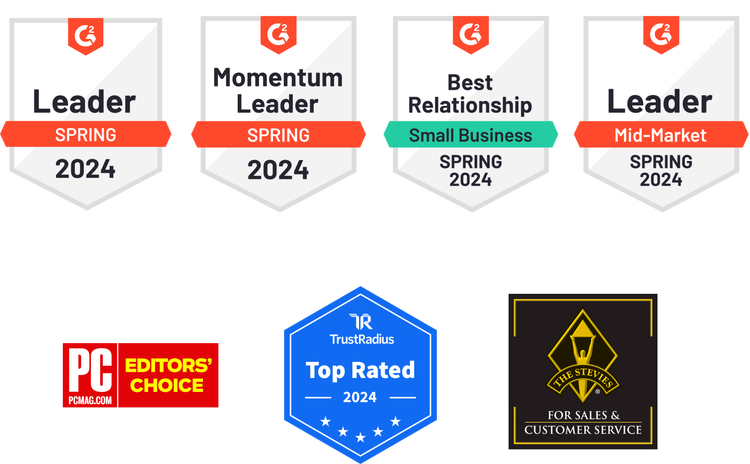
BambooHR is rated 9.3 for ease of use on G2 and also comes highly recommended by reviewers via PCMag, GetApp, and other sources. We love getting feedback about our HR software, and we're always improving! Check out a few of our awards: